

The architect Pallavi Dean is an active, prominent figure in the design community of the United Arab Emirates. With Indian origins, raised in Dubai, she worked for many years in London and founded her studio Pallavi Dean Interiors in Dubai in 2013, renamed Roar in 2018. After over 80 projects completed in the Middle East, in the sectors of hospitality, residences, and workspaces, the studio’s short-term goal is to expand and open new offices in Saudi Arabia first and then in Mumbai so that it can support its clients on the ground.
Roar’s design philosophy is rooted in being listeners and forging a relationship of great understanding and empathy with clients, even to the point of working with an in-house psychologist. She explains in this conversation, “At Roar, we are great listeners and work with empathy to understand what our clients want and need before producing design solutions. My design process is intuitive and based on deep empathy. My approach is collaborative and not ego-driven.”
Which project(s) do you consider seminal for the firm?
Sheraa, a not-for-profit entrepreneurship center we worked on about 11 years ago. It was within the American University of Sharjah where I got my first degree in architecture from. Designing this incubator and collaboration space for the next generation of entrepreneurs was a real delight and a beautiful full-circle moment for me as a former design student and entrepreneur.
Could you explain how your User Experience Design method works?
As designers, we watch human behaviour, and create spaces that support that behaviour. This is at the core of what we do. Empathetic design is the underlying philosophy that has constantly driven the firm forward. When we say ‘empathy-based design’, we mean putting the users of the space at the centre of it. For example, we don’t start our design process until our client has had a one-to-one conversation with our in-house psychologist.
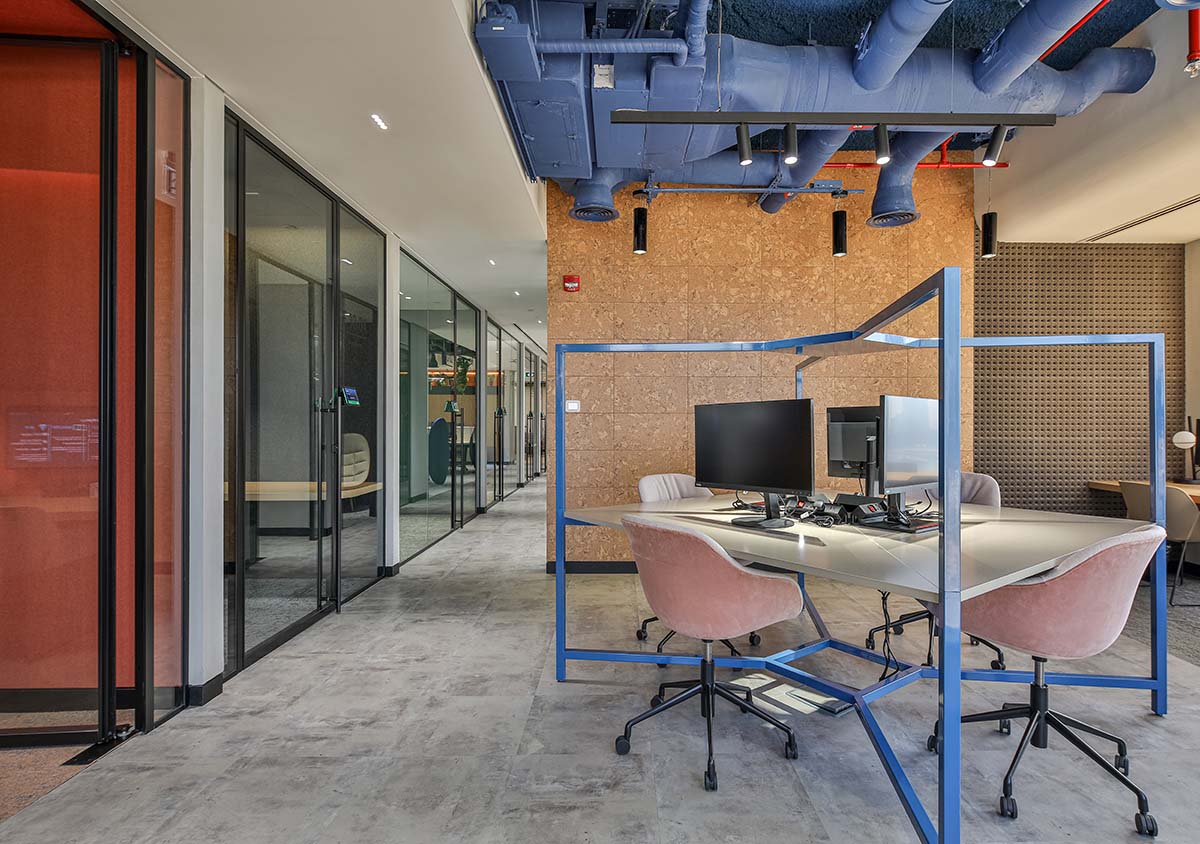
We feel that we can only create a successful design if we are empathetic and hone our listening skills. I trust that by understanding the people who will use a space, we can create designs that meet their needs holistically. This empathetic lens allows me to design spaces that align with their users on a deeper level, promoting a sense of belonging and well-being. For a recent office space we designed for a global law firm, we held a series of focus groups with the local team to determine what key requirements needed to be met in the new office, both from practical and well-being perspectives. It was a fair process in which everyone’s needs and desires were heard and incorporated into the design.
What is your approach to environmental and social sustainability?
My approach is collaborative and not ego-driven. When it comes to designing with the environment in mind, I bring this same level of careful thought to specifications and detailing. We also try to source and employ locally as much as possible. Most of our work is very contextual; the design narrative is deeply embedded in the local region. We try to make sure that we source directly from the local supply chain—a lot of the furniture we use is bespoke and made in factories within a 100km radius of where the project is.
Along with your self-designed office, you have completed many offices and HQs in 2022 and 2023. How do you think workplace interior design has changed in the last decade?
There’s been a heightened focus on flexible layouts to accommodate remote work and social interaction equally. Designing for health and well-being has become paramount, with increased ventilation, touchless technology, and nature-inspired elements being integrated.
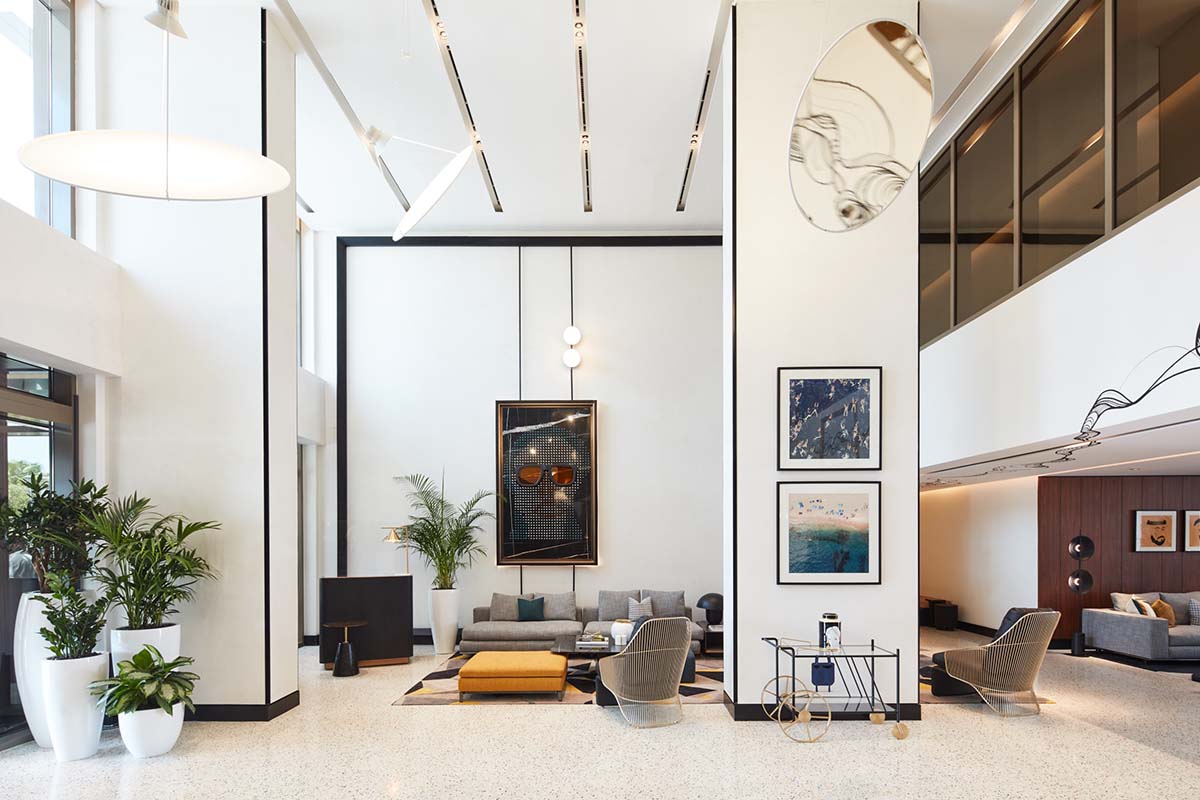
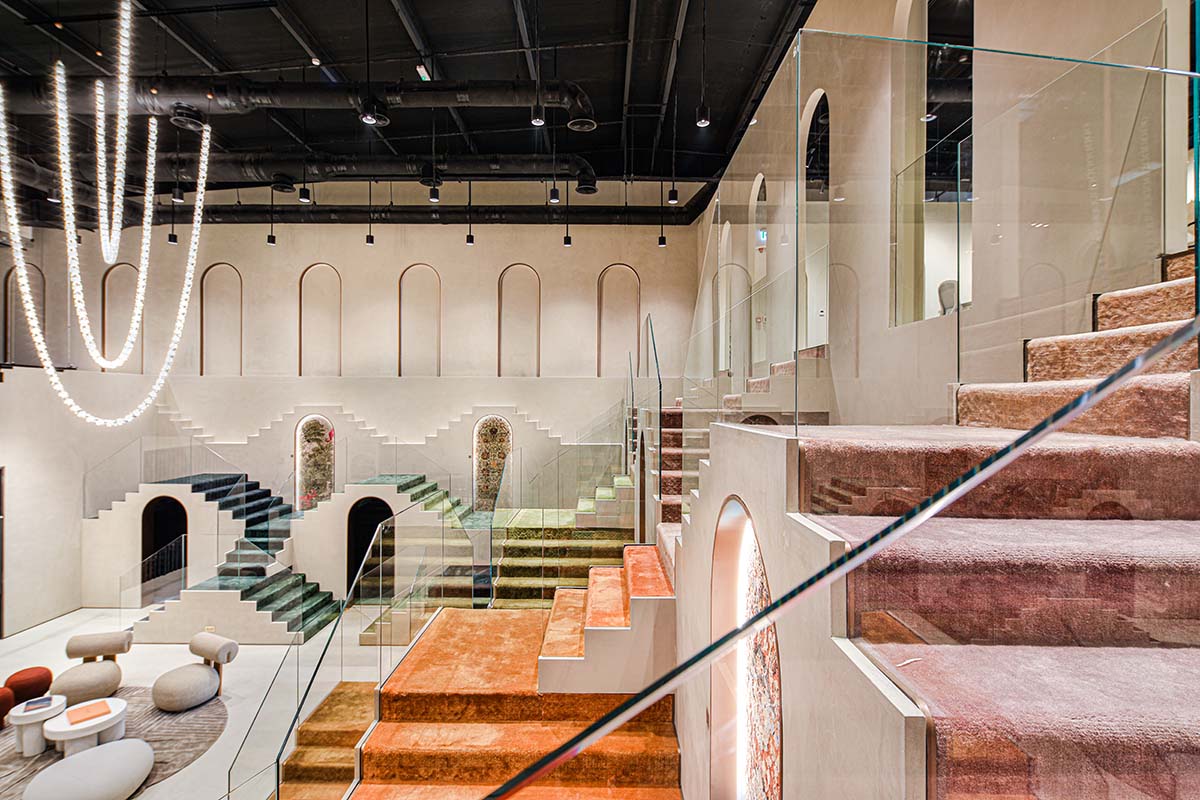
‘Playful’ is a keyword in your work. Is it simply a mood distinguishing spaces or a way of approaching design?
We’re all about creating designs that are playful and totally out-of-the-box. I feel that quirky and unexpected elements bring spaces to life. Designing outside the lines is my way of keeping spaces vibrant and intriguing – allowing them to tell a story and evoke emotions. The drive probably comes from a desire to challenge conventions, spark conversations, and provide clients with memorable and meaningful spaces that resonate with their individuality.
What kind of role and value do both customisation and craftsmanship have in your practice?
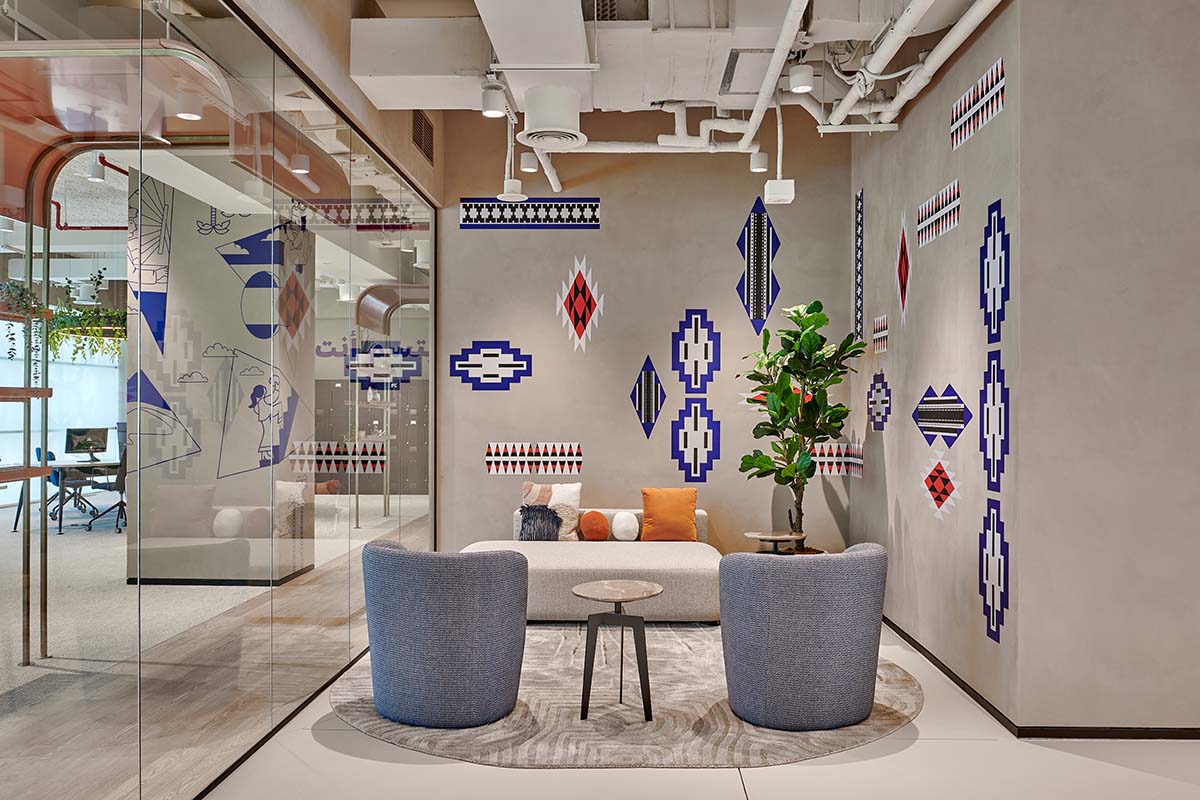
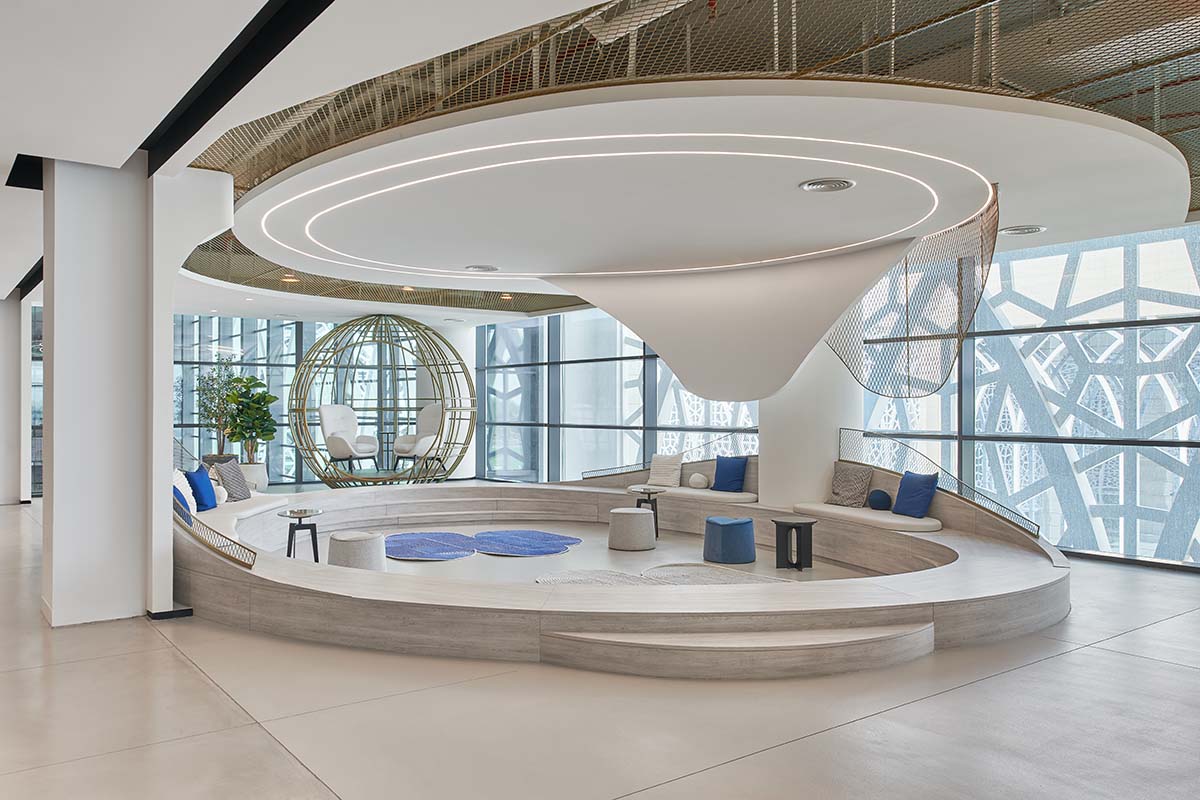
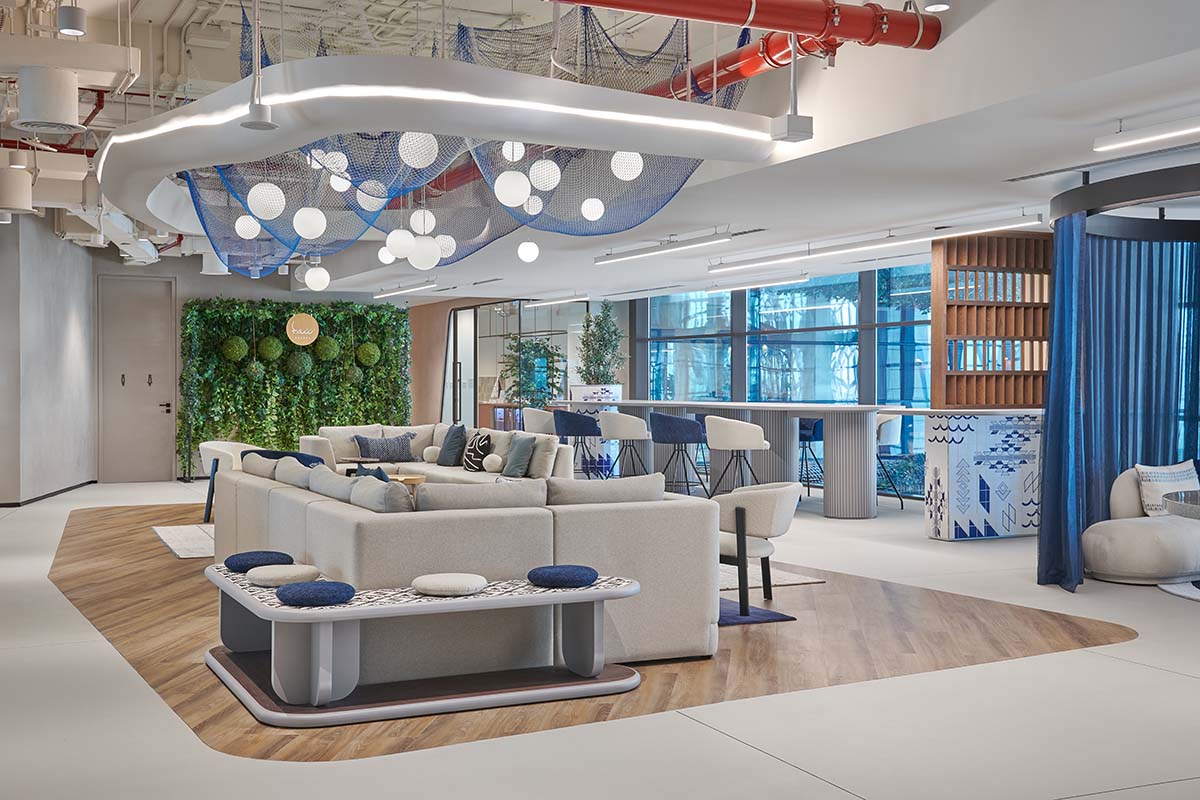
We often use customisation and craftsmanship to anchor a project in its local context. In our latest space for the Sharjah Entrepreneurship Center (Sheraa), we incorporated the work of local artists with subtle Arabic calligraphy elements to embody the spirit of inspiration that Sheraa imparts to young entrepreneurs. We worked with Emirati artists to create bespoke wall and ceiling murals that pay homage to the area.
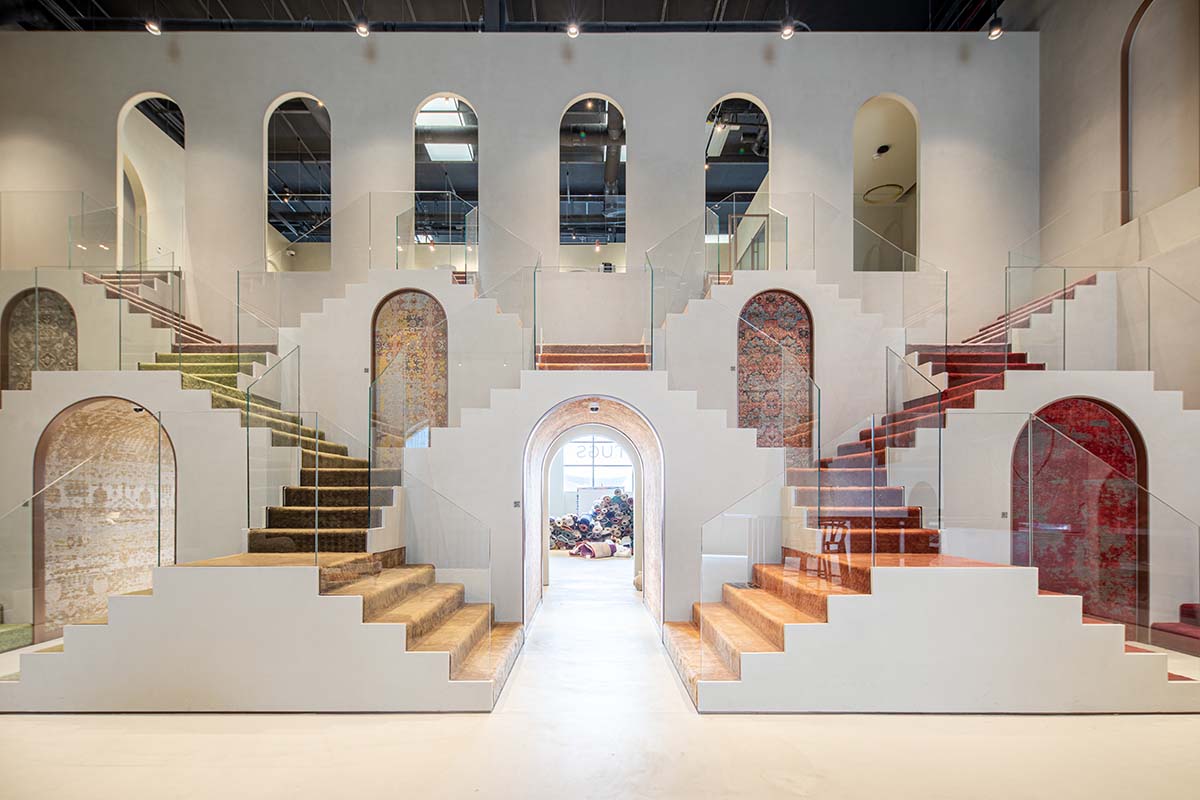
The ceiling features are inspired by the UAE’s pearl industry, reflecting the historical significance of pearl diving in the region. We also wanted to celebrate the UAE’s cultural heritage by including elements of Al-Sadu, a traditional weaving technique central to the Bedouin way of life. This historic art form now finds its place in contemporary interior design and architecture, further connecting Sheraa to the region’s cultural roots.
Can you tell us about your ongoing and future projects?
We’ve had a very busy first half of the year, working on a wealth of projects from the Abu Dhabi campus of the esteemed Swiss Hospitality Academy, Les Roches, alongside a new hotel in Saudi’s Al Baha region focused on wellness and nature therapy, to the BCG offices in Dubai. We are also expanding into the Kingdom of Saudi Arabia and setting up a full office there along with exploring opportunities to set up a full-service studio in Mumbai as our projects become more global. We want to be able to service our clients with boots on the ground.


